Easy Cotton Dishcloth Free Crochet Pattern Step-by-Step
Dense, squishy cotton fabric makes these handmade scrubbers feel substantial in your palm and work effectively against stubborn stuck-on food. This project suits beginners who want to practice consistent tension because the moss stitch rhythm is repetitive and predictable once you establish the first few rows. You will find that the finished cloth is durable enough to survive weekly cycles in a hot washing machine. Learning the moss stitch provides a foundation for more complex projects while resulting in a functional home item you can finish within a single quiet afternoon session at home.
Why This Project Is Worth Making
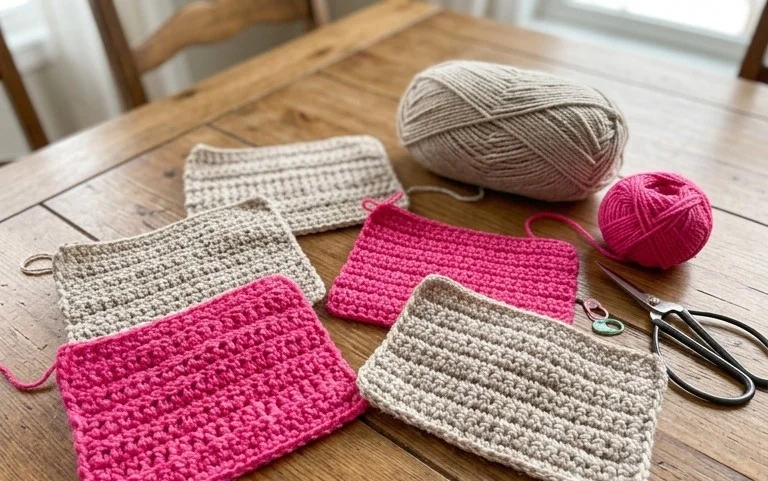
The Classic Crochet Dishcloth uses the moss stitch to create a dense, textured fabric that excels at scrubbing surfaces without scratching them. This pattern is ideal for using up small amounts of cotton yarn from your stash because a single project requires less than 50 yards of material. It is a quick afternoon project that helps you master tension control and clean edge work. Because it is worked flat in a simple back-and-forth rhythm, you can easily pick it up and put it down during a busy day.
I was able to finish two of these in an evening while watching a movie, and the texture is much better for washing dishes than the store-bought ones I usually buy.
— Sarah, home crafter
Pattern Overview & Skill Level
- Skill Level: Beginner
- Approximate Time: 45 to 60 minutes
- Construction: Worked flat in rows, back and forth
- Finished Dimensions: 8 inches by 8 inches
Materials & Supplies Needed
- Yarn: Worsted #4 weight, 100% cotton, approximately 45 yards. Cotton is necessary for its absorbency and heat resistance.
- Hook Size: 5.0 mm (US H-8)
- Notions: Tapestry needle for weaving in ends, scissors, and a measuring tape.
- Yarn Substitutions: You can use a cotton-linen blend for increased durability, though this may make the fabric slightly stiffer. Do not use acrylic yarn, as it will melt if exposed to hot pans and lacks the necessary water absorption for cleaning.
Stitch Guide & Abbreviations (US Terms)
- ch = chain
- sc = single crochet
- st/sts = stitch/stitches
- sk = skip
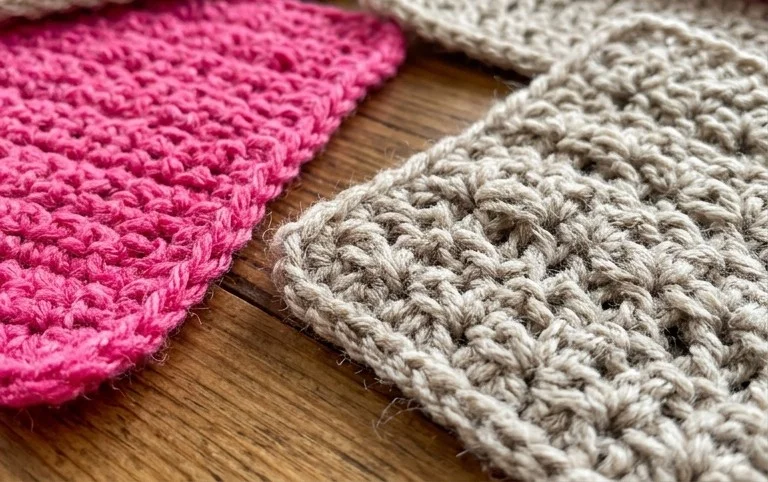
- moss stitch = a pattern created by alternating single crochet and chain stitches, working the single crochet into the chain space of the row below.
Step-by-Step Pattern Instructions
Main Body
The dishcloth is worked in a foundation chain of an even number to ensure the pattern aligns correctly.
- Row 1: Ch 32. Sc in the 4th ch from the hook. *Ch 1, sk 1 ch, sc in the next ch. Repeat from * across until the end of the row. Turn. (16 sc, 15 ch-1 spaces)
- Row 2: Ch 2 (counts as ch 1 and the first skipped stitch). Sc in the first ch-1 space. *Ch 1, sk the sc, sc in the next ch-1 space. Repeat from * across, finishing with a sc in the space created by the turning chain of the previous row. Turn. (16 sc, 15 ch-1 spaces)
- Rows 3–30: Repeat Row 2.
Finishing
After completing Row 30, do not fasten off immediately. Work one final round of single crochet around the entire perimeter to give the edges a professional, finished look. Place 3 sc in each corner to allow the yarn to turn smoothly without puckering. Fasten off and use your tapestry needle to weave the loose ends into the back of the stitches, ensuring you secure them firmly to prevent unraveling during washing.
Care & Washing Instructions
- Machine wash on a warm setting (up to 104°F) with similar colors.
- Tumble dry on low heat or lay flat on a towel to air dry to prevent shrinkage.
- Reshape the cloth while damp if it loses its square form during the drying process.
Pro Tips & Common Mistakes to Avoid
Maintain consistent tension throughout the project, especially on the chain stitches, because tight chains will make it difficult to insert your hook in subsequent rows. Use a stitch marker on the first stitch of every row to help you track your progress and identify where to place your final stitch. If you decide to adjust the size, ensure your starting chain is an even number to maintain the moss stitch pattern; note that increasing the size will require significantly more than 50 yards of yarn. Weave your ends in multiple directions—horizontally and then vertically—to ensure they stay locked in place even after many laundry cycles.
Frequently Asked Questions
Can I use a different yarn weight for this pattern?
You can use DK or bulky weight yarn, but you will need to adjust your starting chain count and the total number of rows to achieve the desired 8-inch width. Always check your gauge before starting.
Is this pattern suitable for someone who has never crocheted before?
Yes, this is an excellent starter project. It uses only the single crochet stitch and chain stitch, which are the foundational elements of almost all crochet projects.
How do I keep the edges straight?
The most common cause of wavy edges is missing the final stitch of a row. Always count your single crochets to ensure you have 16 in every row.
Am I allowed to sell the dishcloths I make from this pattern?
You may sell finished items made from this pattern as long as you provide credit to the designer in your product description and use your own photographs for your listings.
Your new handmade dishcloth brings a bit of handmade charm to your kitchen sink routine and performs significantly better than mass-produced versions. You can experiment with adding a contrasting color stripe every four rows for a modern look or simply adjust the starting chain count if you need a larger size for cleaning pots and pans. Sharing a photo of your finished creation helps others get inspired to pick up their hooks too. Please browse the rest of our collection for additional free patterns that help you build your home crafting skills.